
Your perfume disappears by lunch. You blame the bottle. You spend more on a stronger formula, the same thing happens, and you start to wonder whether anything actually lasts. Most of the time, the fragrance is not failing. Something else in the equation is.
Skin chemistry, note structure, environment, application technique, and even your own nose all conspire to make perfume seem like it has vanished when, in reality, it is still doing its job.
This guide walks through the six most common causes of fragrance underperformance, in roughly the order you should check them. Diagnose the right one, and you can stop overspraying and overspending.
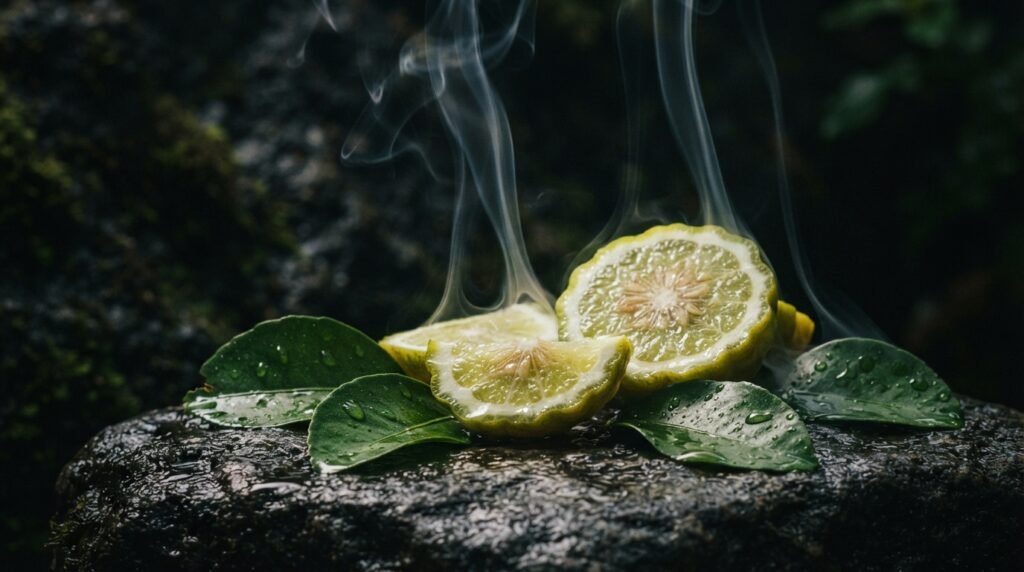
Citrus, aquatic, and green fragrances are built to evaporate quickly. The format is not failing. The composition is doing exactly what it was designed to do.
The mechanism is volatility. Top notes like bergamot, lemon, neroli, marine accords, and green leaves use molecules with low boiling points. Body heat alone is enough to push them off the skin.
Limonene, the molecule that makes citrus smell like citrus, has a boiling point around 176°C, far lower than the heavier base materials in oriental or amber compositions.
The fragrance pyramid explains the rest. Top notes flash off in 15 to 30 minutes. Heart notes carry the wear for two to four hours. Base notes anchor the dry-down.
If your fragrance is mostly top and heart with a light base, it will fade much faster than one built on heavy woods and ambers, regardless of concentration.
A practical comparison: Acqua di Parma Colonia, a classic citrus cologne, will fade to a skin scent within three hours on most people.
Tom Ford Tobacco Vanille, an amber-gourmand, can still project after eight. Same person, same skin, completely different performance because the formulas were built for different timelines.
Skin condition dramatically affects fragrance longevity. The most common reason a perfume “doesn’t last on you” is that your skin is too dry to hold the oils.
Dry skin works like a chalkboard. Fragrance lifts off fast because there is no oil substrate to slow the evaporation. Hydrated skin works like a sponge. The same fragrance can last hours longer on it. People with naturally oily skin often report better longevity on the same bottles their dry-skinned friends complain about, and the difference is real.
The fix is moisturizer applied to your pulse points before fragrance. Use an unscented option like Cetaphil, CeraVe, Aveeno fragrance-free, or plain petroleum jelly. Apply right after a shower while your skin is still warm and slightly damp. Spray perfume on top once the lotion absorbs.
Climate amplifies the dry-skin problem. Cold weather, dry air, and over-air-conditioned offices all pull moisture out of your skin within hours of you walking in. By 11 a.m. you might be moisturized enough at the wrist but completely dehydrated at the chest and neck. A morning lotion-and-spray ritual might need a midday reapplication just to keep the skin condition holding the fragrance.
In a humid place like Lagos, this problem reverses for most people. Skin stays naturally more hydrated, and longevity usually improves. The downside is that the same humidity that helps your skin also amplifies fragrance projection, so what feels normal in winter feels overwhelming in July.
Your brain filters familiar smells faster than you realize. The fragrance is still there. You just cannot detect it because your olfactory system has adapted.
The technical term is olfactory fatigue or anosmia to one’s own scent. Within about an hour of putting on a fragrance, your brain decides the smell is part of your baseline environment and stops registering it as new information. Other people can still smell you clearly. You are essentially blind to yourself.
The most common consequence is overspraying. You stop smelling your perfume, assume it has faded, and spray more. Now you are projecting at twice the intended strength. Coworkers smell you across the room. You still cannot smell yourself. The cycle continues until you become the person nobody wants to share an elevator with.
Three ways to test whether your fragrance is actually gone:
If you fail all three tests, the fragrance has actually faded. If you pass any of them, you are nose-blind, and reapplication is the wrong move.
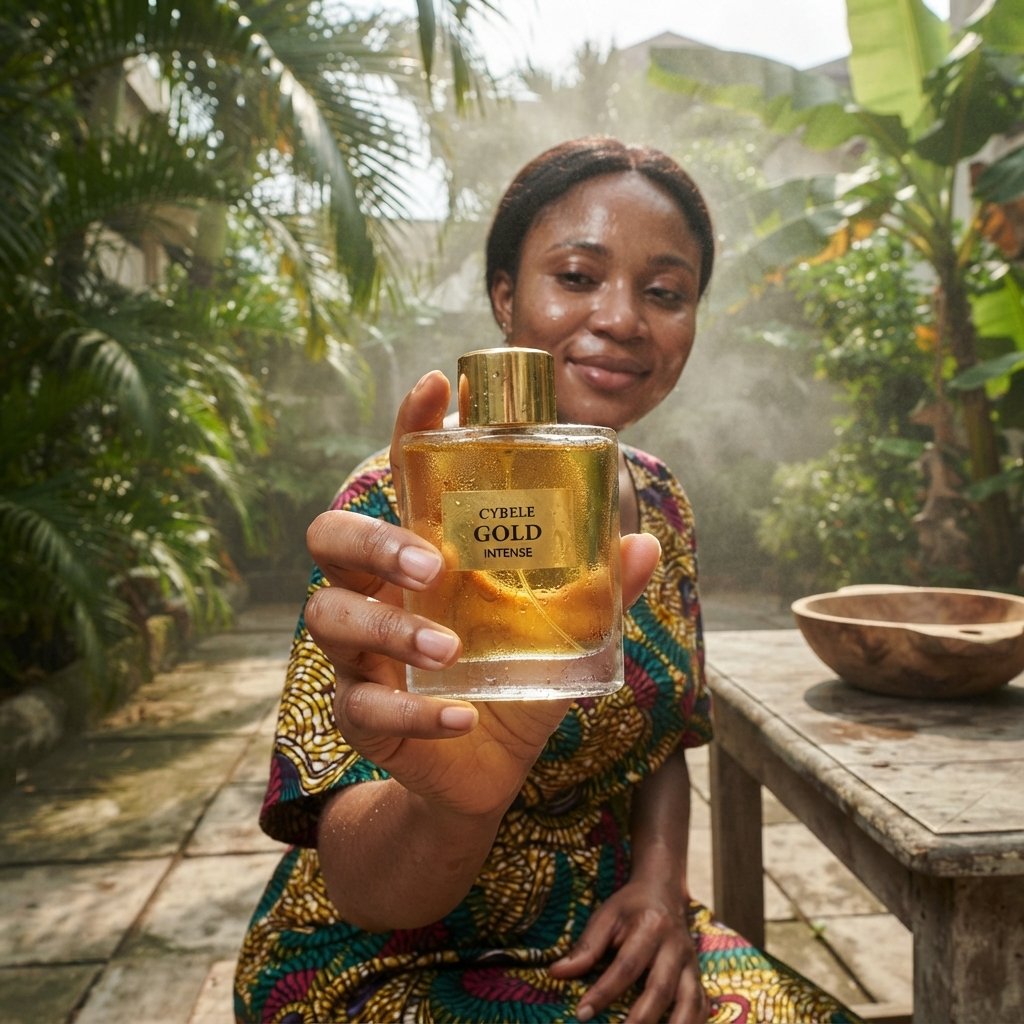
Wrong concentration choices create performance mismatches that look like fragrance failure but are really format failures.
A few common mismatches:
Humidity and heat both amplify projection while sometimes shortening top-note longevity. The net effect is that a fragrance can simultaneously feel “too strong” in the opening and “gone too fast” in the dry-down when worn in the wrong climate. The fix is not to spray more. It is to switch to a format better matched to your environment.
Application errors sabotage performance more than people realize. A great fragrance applied badly will underperform a mediocre fragrance applied well.
The most common application mistakes:
The single biggest mistake is treating perfume like cologne and over-applying. A well-built EDP needs two or three sprays maximum. Six sprays will not last six times longer. They will project at six times the strength for the same total wear, then crash to nothing at the same time as two sprays would have.
Not every fragrance is designed for massive projection. Some of the most respected compositions in modern perfumery are deliberately quiet.
The skin scent concept describes a fragrance worn so close to the body that only someone within hugging distance can smell it. Minimalist fragrances, intimate musks, and many artistic niche releases live in this space on purpose. Slumberhouse Norne, Frédéric Malle Musc Ravageur, and Le Labo Another 13 all wear close to the skin even at full strength.
Some niche perfumers consider close-wear projection a feature, not a flaw. The argument is that fragrance is for the wearer, not the room. A scent that demands physical proximity creates intimacy. A scent that fills a public space imposes itself on people who did not ask to smell it.
If you bought one of these fragrances expecting it to project across a dinner table, you are going to feel like the bottle is broken. It is not broken. It is doing what it was designed to do. The question is whether what it was designed to do matches what you wanted.
This is also where setting expectations from reviews matters. Fragrantica reviewers grading “performance” on a 10-point scale will rate a skin-scent composition poorly because it does not project. That reviewer wanted a projector. The perfumer made an intimate scent. Both can be right at the same time.
Perfume fading is usually about composition, environment, or perception, not bad fragrance quality.
Before spending more on a stronger bottle, work through the diagnostic in order: is the fragrance built to fade fast, is your skin holding the oils, are you actually nose-blind, does the concentration fit your environment, are you applying it correctly, and was the perfume designed to wear quietly in the first place?
Most performance complaints get solved at step two or three. The bottle is fine. The wearing strategy needs adjusting.